Lotus-water Lily Flower Coloring Page
A Designer’s First Glance: Calm, Clean, and Craft-Ready
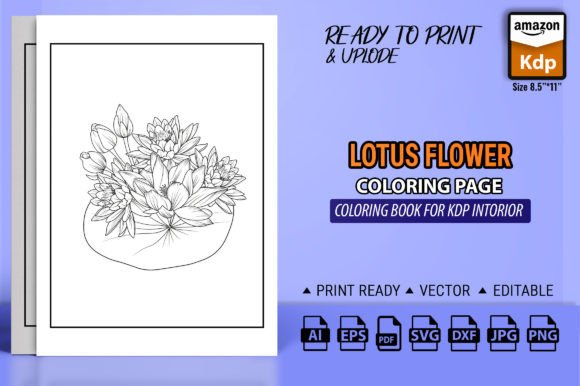
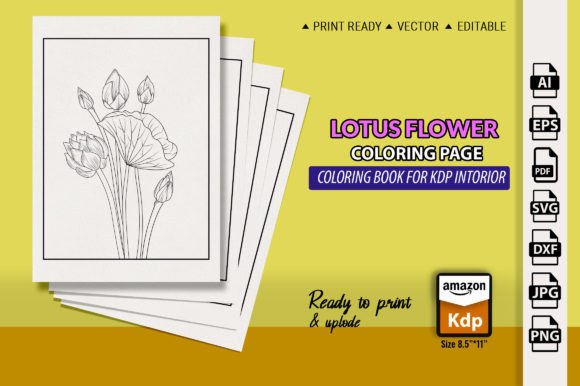
When I opened Lotus-water Lily Flower Coloring Page, I didn’t see just another floral outline—I saw a quiet confidence in its shape. The lines are smooth but not overly rigid; the petals flow with gentle asymmetry, echoing how real lotus blooms unfurl—not perfectly symmetrical, but purposefully graceful. At 8.5×11 inches and built as vector art in Adobe Illustrator, it scales cleanly without pixelation, which immediately tells me this isn’t a rushed clipart import. It breathes like a hand-drawn sketch, yet holds up under close inspection—ideal for embroidery designers who need clean edges to translate into satin stitch or fill stitch without jagged surprises.
Real Project Test: Embroidering a Linen Tote Bag for a Local Boutique
Last week, I used Lotus-water Lily Flower Coloring Page as the foundation for a custom embroidered linen tote—part of a small-batch spring collection for a neighborhood gift shop. I traced the central bloom, simplified a few inner lines for stitch clarity, and digitized it at 4.2 inches wide. On medium-weight natural linen with tear-away stabilizer, the design stitched cleanly: open petal spaces stayed airy, stems held definition, and the subtle curve of the lily pad base gave grounding without heaviness. Customers responded strongly—not just to the flower itself, but to how *balanced* it felt on the bag. No visual crowding. No “too much” energy. Just calm intention.
Where It Shines (and Where to Pause)
Lotus-water Lily Flower Coloring Page works beautifully for:
- Custom apparel—especially sweatshirts and lightweight tees where soft botanicals read as thoughtful, not fussy;
- Baby embroidery and nursery decor, thanks to its serene, non-cluttered silhouette;
- Embroidered patches and aprons, where clean outer contours hold up through repeated wear and washing;
- Holiday and wedding gifts, particularly for couples who lean into organic, grounded aesthetics;
- Etsy listings and small shop merchandise, where handmade presentation hinges on refined simplicity over busy detail.
Use caution when applying it to:
- Small hoop sizes (under 4 inches)—the full composition benefits from breathing room; consider cropping the central bloom only;
- Textured or stretchy fabrics—like slubbed cotton or knits—where fine interior linework may blur unless stabilized well;
- Dark fabric backgrounds—test thread color contrast early; light ecru or soft sage threads lifted the design better than stark white;
- Curved surfaces like caps or curved pillow covers—some petal tips may distort if not repositioned or adjusted in your embroidery software;
- Frequent-wash items like tea towels or baby bibs—avoid ultra-fine interior details that could fray or lose definition over time.
Design Integrity Meets Customer Trust
What makes Lotus-water Lily Flower Coloring Page more than just a pretty outline is how it supports *perceived value*. When customers see this on a finished product—a hand-stitched pillow cover, a boutique sweatshirt, a personalized baby onesie—they don’t just register “flower.” They sense care in the line quality, intention in the spacing, and quiet sophistication in the motif. That translates directly to trust: they believe the maker took time, chose meaningfully, and understood their aesthetic. For Etsy sellers and craft business owners, that subtle credibility compounds across listings, repeat buyers, and word-of-mouth referrals.
Practical Notes Every Embroidery Designer Should Check
Before stitching—or listing a finished product based on Lotus-water Lily Flower Coloring Page—do these six things:
- Test on scrap fabric first, using your actual thread and stabilizer combo—linen behaves differently than quilting cotton, and performance shifts fast;
- Review stitch density in your digitizing software—vector outlines don’t auto-translate to optimal stitch count, especially in petal overlaps;
- Confirm hoop size compatibility with your machine and intended placement—don’t assume the full 8.5×11 layout fits your standard hoop;
- Inspect small details at 200% zoom—those delicate stamen lines may vanish or break apart in dense fill areas;
- Try black-and-white mockups before finalizing thread colors—this design gains strength from tonal contrast, not just hue;
- Verify licensing terms before selling finished items or digital embroidery files—since it’s labeled a KDP Interior coloring book, commercial use rights aren’t implied unless explicitly stated by the creator.
Final Thought: A Quiet Anchor for Your Creative Work
Lotus-water Lily Flower Coloring Page won’t shout. It doesn’t need to. In a market saturated with bold, high-contrast, trend-chasing motifs, this design offers something rarer: stillness with structure. It’s a reliable anchor for embroidery projects where elegance lives in restraint—whether you’re stitching a one-of-a-kind gift, building a cohesive boutique line, or expanding your portfolio of digital embroidery files. It respects the fabric. It honors the stitch. And most importantly, it gives your customer space to feel—not just see—the care behind the handmade product.