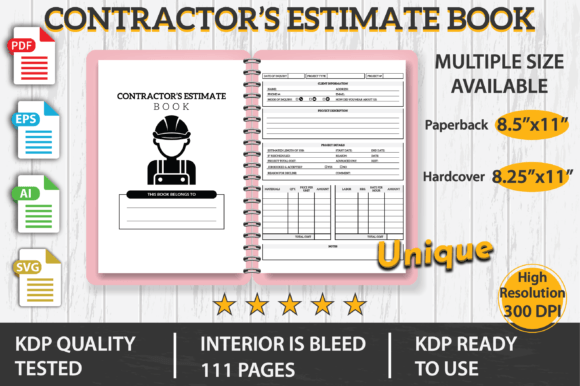
Contractor’s Estimate Book Graphics for KDP Interiors
First Impressions: A Practical, Polished Craft Asset
When I first opened Contractor’s Estimate Book, I didn’t see “just another planner interior”—I saw a ready-to-use graphic design asset with serious handmade business potential. It lands somewhere between clean professionalism and approachable craftsmanship: not overly ornate, not starkly minimal, but confidently functional. Think rustic-chic meets contractor-core—think exposed beams, handwritten notes on kraft paper, and subtle grid lines that whisper “organized” without shouting “corporate.” It’s the kind of aesthetic that attracts small business owners, home renovators, DIY contractors, and even wedding planners needing budget-tracking charm. For my Etsy shop—where I sell printable wall art, custom sticker bundles, and Cricut-ready party kits—it felt instantly usable, not just decorative.
Where This Graphic Design Asset Shines in Real Crafting
I tested Contractor’s Estimate Book across six real production workflows—and it held up beautifully in most. As an SVG design, it cut flawlessly on my Cricut Maker 3 for vinyl mug wraps and tumbler decals (especially when scaled to 3–4 inches wide). The line weights are consistent, no hairline gaps or overlapping paths—critical for clean weeding. As a PNG design with transparent background, it layered perfectly over distressed kraft paper textures in Canva for printable gift tags and thank-you cards. I also dropped it into a Silhouette Studio project for a batch of 2” round stickers—no pixelation, no jagged edges.
It’s especially strong for:
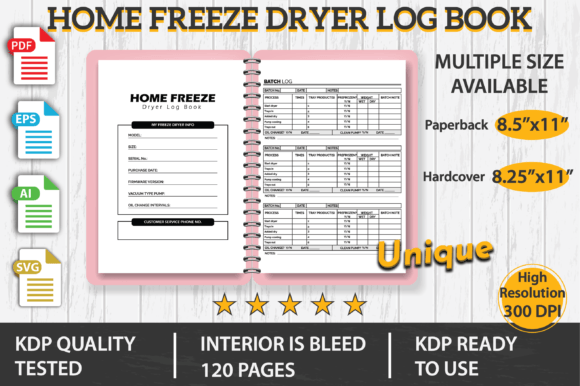
- Printable design bundles: The 8.5 x 11 inch layout (with bleed!) makes it ideal for KDP interiors, but also for print-on-demand planners, budget trackers, and client-facing proposal sheets sold as digital products.
- Small business branding: I used select pages as backgrounds for branded invoice templates and service estimate cards—giving my handyman-themed side hustle instant credibility.
- Craft fair packaging: Printed on matte cardstock and cut with my Cricut, the grid-style pages became elegant backing boards for custom tool-themed gift sets.
- Seasonal craft collections: Paired with warm-toned sublimation ink, it worked surprisingly well on ceramic mugs for Father’s Day and contractor appreciation gifts.
- Product mockups: Placed over realistic construction site or workshop backgrounds, it added authenticity to my Etsy product listings—no stock photo needed.
Where to Use Contractor’s Estimate Book With Care
Honest note: this isn’t a one-size-fits-all clipart pack. Because it leans into fine-lined grids and subtle shading, some uses require extra attention:
- Very small sticker sizes (<1.5”) — text and thin dividers lose clarity. I simplified the layout manually before cutting 1” hexagon stickers.
- Layered vinyl projects — avoid stacking multiple intricate elements from the same page unless you’ve flattened and offset lines in design software first.
- Dark product bases — the lighter gray tones don’t always pop on navy or charcoal tumblers. I boosted contrast in Photoshop before sublimation printing.
- Crowded compositions — if you’re adding script fonts or icons *on top* of the estimate table, leave breathing room. Overcrowding muddies its clean utility vibe.
Practical Crafter Notes You’ll Actually Use
This is where experience matters. Before I added Contractor’s Estimate Book to my shop inventory, I ran these checks:
- Test-cut first: Ran a single-page SVG through my Cricut with transfer tape—confirmed no stray nodes or disconnected paths.
- Preview transparency: Opened the PNG in Preview (Mac) and checked for hidden white borders or anti-aliasing halos around text.
- Confirm resolution: At 300 DPI and full bleed, it’s sublimation-safe—but I resized the main title block separately for 12x16 wall art prints to avoid stretching.
- Color-test on both substrates: Printed a sample on white cotton and dark heather grey fabric. Adjusted saturation slightly for the latter.
- Mockup verification: Dropped the design onto real Cricut mug and tumbler mockups—not just flat previews—to assess visual weight and balance.
- Font pairing: It pairs best with grounded sans serifs (like Montserrat for headers) or friendly handwritten fonts (like Quicksand) for notes—avoid overly decorative scripts that clash with its practical tone.
- Licensing check: Confirmed commercial license covers customer orders, Etsy sales, and physical product bundling—no attribution required, which simplifies my workflow.
Why This Fits Handmade Business Needs Better Than Generic Clipart
Most clipart feels like borrowed decoration. Contractor’s Estimate Book feels like built-in utility—designed for action, not just aesthetics. When a customer orders a custom “Renovation Planner Kit” from my shop, I’m not just delivering pretty pages—I’m delivering structure, trust, and niche relevance. That’s why it’s become part of my go-to design assets for themed bundles: paired with matching “Before & After” checklist illustrations and contractor badge stickers, it forms a cohesive, market-ready collection. It’s not flashy—but for crafters building real handmade businesses, reliability, clarity, and commercial flexibility matter more than glitter.
Final Thought: A Quiet Workhorse, Not a Showstopper
If you’re hunting for bold, festive, or ultra-trendy illustration—you’ll want something else. But if you run a small business serving builders, remodelers, DIY homeowners, or organized creatives—and you need clean, printable, cut-ready graphics that support function *and* feel intentional—Contractor’s Estimate Book is quietly brilliant. It’s the kind of KDP Interiors asset that doesn’t shout, but gets noticed by the right buyer. And in handmade selling? That’s often exactly how trust begins.