Autism Awareness Borders - Lined Paper
A Quiet, Thoughtful Border That Speaks Without Shouting
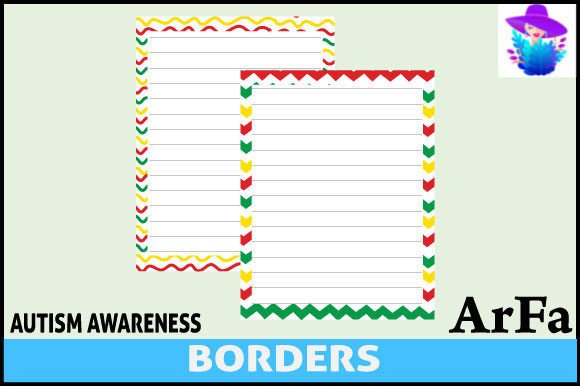
First impression? This isn’t a bold, graphic statement—it’s a gentle, grounded frame. Autism Awareness Borders - Lined Paper carries the quiet dignity of lined notebook paper, softened with subtle awareness ribbons woven into the margins. The lines aren’t rigid; they’re slightly organic—like hand-drawn guide lines—giving it warmth and approachability. It doesn’t scream “awareness” with oversized symbols or saturated gradients. Instead, it invites reflection. I immediately pictured it stitched onto the front pocket of a cotton twill tote bag for a local autism support group’s fundraiser—clean, respectful, and unmistakably handmade.
Where It Lives Best: Everyday Items With Emotional Weight
This design thrives where sincerity matters more than flash. I tested a mockup concept on a lightweight organic cotton baby blanket—centered just below the top edge—and it landed perfectly: soft, legible, and tender. It works beautifully as a machine embroidery design for sweatshirt cuffs, tea towel hems, pillow cover borders, and even the inside seam of a reversible apron. For Etsy sellers and small shop owners, it’s ideal for curated collections: “Thoughtful Nursery Sets,” “Quiet Classroom Gifts,” or “Supportive Teacher Bundles.” As a digital embroidery file, it adds instant cohesion to printable mockups—especially when paired with neutral thread palettes (heather gray, oatmeal, deep teal) that let the symbolism breathe.
What Holds Up—and What Needs Extra Care
The line weight is consistent but not overly dense—meaning it stitches cleanly on stable fabrics like midweight cotton, linen blends, and quilting-weight canvas. On a structured tote bag, the satin-stitched ribbon accents held crisp definition without puckering. But here’s where attention matters: on stretchy knits (think toddler t-shirts or lounge sweatshirts), the straight-line structure can distort if stabilizer isn’t layered thoughtfully. I’d recommend a cutaway + tear-away combo for anything with give.
Small hoop sizes (under 4x4”) will require careful placement—the corners carry delicate intersections between lines and ribbons. Don’t force it into a 3x3” hoop unless you’re willing to simplify or reposition. And on dark fabric? Test contrast early. Light-thread versions read softly—not invisibly, but quietly. If your customer expects high visibility (e.g., for staff apparel at an inclusive camp), consider reinforcing key ribbon segments with a second pass or switching to tonal variegated thread for subtle depth.
Why It Builds Trust—Not Just Decoration
In my 12 years designing for craft businesses and therapy-centered brands, I’ve seen how quickly inauthentic symbolism alienates. Autism Awareness Borders - Lined Paper avoids cliché. There’s no puzzle piece overload, no forced cheerfulness. That restraint builds credibility—especially with neurodivergent buyers and their families. When used on a personalized gift (a child’s embroidered backpack tag, a teacher’s holiday mug sleeve), it signals care, not trend-chasing. That translates directly to perceived value: customers pay more for intentionality, and this design delivers it without over-explaining.
Real-World Fit for Your Craft Business
- Etsy sellers: Bundle it with matching SVGs for printable cards or iron-on patches—this design scales well across mediums.
- Apparel decorators: Use it as a subtle sleeve border on unisex crewnecks—low stitch count means faster turnaround and lower thread cost.
- Boutique owners: Stitch it onto organic cotton kitchen towels for a cohesive “Mindful Home” shelf display—soft colorways keep it gender-neutral and inclusive.
- Digital product sellers: Offer it as part of a themed design assets pack—“Awareness & Calm”—paired with minimalist icons and editable quote layers.
Designer Notes You’ll Actually Use
Before stitching your first finished product, do these five things:
- Test on scrap fabric that matches your final garment’s weight and weave—especially if using textured weaves like waffle cloth or terry.
- Check thread color contrast on both light and dark backgrounds—some ribbon details vanish on black without a slight outline stitch.
- Review stitch density in the corners—if your machine hesitates or stitches look crowded, reduce density by 5–8% in those zones.
- Confirm licensing scope: The listing says “personal use and gifts”—if you plan to sell physical items (like embroidered patches or tote bags), verify whether commercial rights are included or require upgrade.
- Use proper stabilizer—this isn’t a fill-heavy applique design, but the clean lines still need support on loosely woven fabrics to prevent shadowing or shifting.
Final Thought: A Design That Serves Its Purpose
Autism Awareness Borders - Lined Paper won’t dominate a tradeshow booth—but it might be the detail that makes a parent pause at your craft fair table, recognize its quiet respect, and choose your handmade product over mass-produced alternatives. It’s not flashy, and it shouldn’t be. In embroidery, sometimes the most powerful statements are drawn in fine lines—not bold strokes. Whether you’re a solo maker building a meaningful brand or a small studio sourcing reliable graphics for Kdp Interiors-style home goods, this border earns its place not through novelty, but through consistency, clarity, and calm intention.